Buy Property in Turkey: A Complete Guide for Foreign Buyers (2025–2026)


TLDR: Foreigners from most countries can fully own property in Turkey. The process involves getting a Turkish tax number, opening a local bank account, completing a mandatory property appraisal, and signing the title deed (Tapu) at the Land Registry. Buying costs roughly 4–6% on top of the purchase price. A $400,000 investment qualifies you for Turkish citizenship. Istanbul, Antalya, and Izmir consistently lead in foreign buyer demand.
Table of Contents
- Can foreigners legally buy property in Turkey?
- What is the step-by-step process?
- What taxes and fees apply?
- Which cities are best for foreign buyers?
- Can buying property lead to Turkish citizenship?
- Do I need a residence permit to buy?
- What are the biggest risks to watch out for?
Can Foreigners Legally Buy Property in Turkey?
Yes — citizens from most countries can buy and fully own residential property in Turkey. This includes apartments, villas, detached houses, townhouses, and branded residences.
The legal basis is Article 35 of Land Registry Law No. 2644, which permits foreign nationals to acquire real estate in Turkey, subject to a few conditions. The property must pass Land Registry (TKGM) checks, your nationality must be on the eligible list, and the property cannot be in a military zone or security-restricted area.
In practical terms, the Turkish market is genuinely open. Foreign nationals purchased 21,534 homes in Turkey in 2025, with Istanbul, Antalya, and Mersin topping the list of preferred locations. (Source: Investropa)
One detail worth knowing upfront: legal ownership only transfers once the Tapu (title deed) is registered in your name at the Land Registry. A private sales contract, no matter how detailed, does not make you the legal owner. This distinction matters more than most buyers realize.
What Is the Step-by-Step Process for Buying Property in Turkey?
The process is well-structured and typically takes between 4 and 12 weeks from first viewing to title deed. Here is how it works:
1. Get a Turkish Tax Identification Number
This is the first practical step for any foreign buyer. You get it from any tax office in Turkey with just your passport. Without it, you cannot open a bank account, sign official documents, or complete the title transfer.
2. Open a Turkish Bank Account
A local bank account is mandatory for sending and receiving funds related to the purchase. All payments must flow through the Turkish banking system — cash transactions are not accepted for official purposes.
3. Hire a Lawyer and Run Due Diligence
A specialized real estate lawyer checks the title deed for debts, liens, shared ownership issues, and legal disputes. They also verify that the property has a valid occupancy permit (iskan). This step is not legally required, but skipping it is one of the costliest mistakes a foreign buyer can make.
4. Obtain a Mandatory Property Appraisal Report
As of 2025, an official appraisal report from a government-licensed expert is required for all foreign property purchases. This report sets the cadastral value of the property and is referenced throughout the process — from the title deed transfer to any citizenship or residency application.
5. Sign the Sales Agreement and Pay the Deposit
A sales agreement sets out the terms: price, payment schedule, and handover date. The deposit is typically 10–20% of the total price and secures the property while remaining steps complete.
6. Transfer Payment and Register the Title Deed
The remaining balance transfers from your Turkish bank account to the seller’s account, documented by a bank wire. Both parties then attend the Land Registry and Cadastre Directorate (or appoint a power of attorney representative) to officially transfer the Tapu. This moment is when you legally become the owner.
(Source: Gurcan Partners, Buying Property in Turkey 2025)
What Taxes and Fees Apply When Buying Property in Turkey?
Beyond the purchase price, budget for the following:
| Cost | Rate / Amount |
|---|---|
| Title Deed Transfer Tax (Tapu Harcı) | 4% of declared value (split between buyer and seller, though negotiable) |
| Annual Property Tax | 0.1%–0.6% of property value per year |
| Property Appraisal Report | One-time government fee (varies by property) |
| Real Estate Agent Commission | 2–4% of sale price + VAT |
| Lawyer’s Fee | Varies (typically 1–2% or a fixed fee) |
| Notary and Translation Fees | Varies |
| Mandatory Earthquake Insurance (DASK) | Required annually |
The most significant one-time cost is the 4% title deed transfer tax. In practice, many sellers split this 50/50 with the buyer, but it depends on the negotiation.
Annual property taxes in Turkey are relatively low by international standards. Urban properties pay 0.2% of declared value, while metropolitan areas pay 0.4%. Agricultural land and rural properties fall at the lower end of the range.
Which Cities Are Best for Buying Property in Turkey?
Three cities consistently dominate foreign buyer activity:
Istanbul
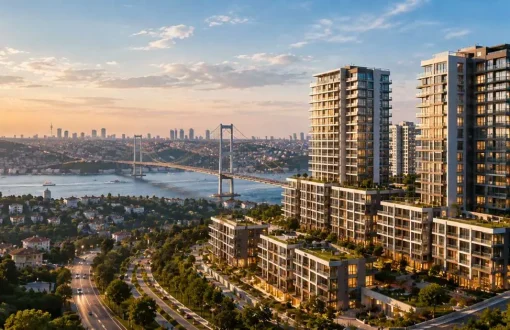
Istanbul is Turkey’s financial and cultural capital, and it remains the benchmark for both rental yields and long-term capital growth. Neighborhoods like Beşiktaş, Şişli, Kadıköy, and Başakşehir attract international buyers across different budgets. The city’s infrastructure, connectivity, and population size make it a sound long-term bet.
In 2024, foreigners purchased 5,979 homes in Istanbul. (Source: Property Turkey Istanbul)
Antalya
Antalya led all Turkish cities in foreign property sales in 2024 with 5,990 units sold to foreigners. The Mediterranean climate, coastal lifestyle, and strong short-term rental demand from tourism make it particularly attractive for buyers targeting rental income. It also tends to offer lower entry prices than Istanbul.
Izmir
Izmir is Turkey’s third-largest city and arguably its most livable. A thriving local economy, an Aegean coastline, a young university-educated population, and prices still below Istanbul levels make it one of the more compelling long-term plays for foreign buyers. Neighborhoods like Alsancak, Karşıyaka, and Bornova see consistent demand.
Beyond these three, Bursa, Bodrum, and Mersin attract specific buyer profiles — Bursa for proximity to Istanbul and its industrial economy, Bodrum for luxury coastal villas, and Mersin for very accessible entry-level pricing.
Platforms like Okaziyon list properties across Istanbul, Izmir, and other key Turkish cities, allowing international buyers to browse and compare options before committing to a visit.
Can Buying Property Lead to Turkish Citizenship?
Yes. Turkey’s Citizenship by Investment program remains one of the most competitive in the world, and real estate is the most popular route.
The requirements:
- Minimum investment: $400,000 USD in one or more properties
- Holding period: You must commit to not selling for at least three years (a legal annotation goes on the title deed)
- Payment proof: All funds must transfer via bank wire and be fully documented
- Coverage: The citizenship extends to your spouse and dependent children under 18
Turkish citizenship gives passport holders visa-free or visa-on-arrival access to over 110 countries and full rights identical to citizens by birth. The application process typically takes 3–6 months after the property transaction completes.
It is worth noting that the $400,000 threshold has remained steady since the Turkish government raised it from $250,000 in 2022. Multiple sources confirm this figure remains current as of 2026. (Sources: Kraemer Law, Invest in Türkiye)
Do I Need a Residence Permit to Buy Property in Turkey?
No. A residence permit is not a prerequisite for the purchase. Foreign nationals can buy property in Turkey while visiting on a tourist visa.
The reverse, however, is useful: owning property in Turkey is one of the strongest grounds for obtaining a short-term residence permit.
As of 2025, the minimum property value required for a residence permit application through real estate ownership is $200,000 USD. This value must be confirmed by the mandatory government appraisal report.
For buyers who want to spend significant time in Turkey — whether for retirement, lifestyle, or business — this pathway is far simpler than most people expect. (Source: Gurcan Partners)
What Are the Biggest Risks When Buying Property in Turkey?
The Turkish market has real opportunities, but it also has specific pitfalls that catch uninformed buyers:
1. Paying before the Tapu transfer
Legal ownership only exists after the Land Registry registers the title deed in your name. Paying a large amount against only a private contract puts you in a vulnerable position. Never transfer the full purchase price before the Tapu is in your name.
2. Missing occupancy permits
Many properties — especially older buildings and villa developments — lack a valid iskan (occupancy permit). This creates problems for residency applications, insurance, utilities, and eventual resale.
3. Title deed issues
Hidden debts, liens, shared ownership, or legal disputes attached to a property only surface through proper due diligence. A qualified real estate lawyer is essential for this.
4. Off-plan project delays
Buying from a developer before completion carries the risk of delays or, in rare cases, project abandonment. Research the developer’s track record and ensure the sales contract includes legal protections.
5. Currency exposure
Properties are often priced in USD or EUR, but transactions close in Turkish Lira. Exchange rate movements can affect the effective cost. Budget conservatively and plan your currency conversion carefully.
Working with a trusted platform and professional legal support removes most of these risks. Okaziyon focuses exclusively on verified properties across Turkey, Dubai, and Baku, helping international buyers navigate the market with reliable information and expert guidance.
Final Thoughts
Buying property in Turkey as a foreigner is genuinely achievable and well-regulated. The legal framework is clear, the process is defined, and the government has actively made the country more accessible to international buyers — particularly through the citizenship and residency pathways.
The key is preparation: know the process before you start, work with qualified professionals, and insist on proper due diligence at every step. Whether you are looking for a home, a rental investment, or a path to Turkish citizenship, Turkey’s real estate market in 2025–2026 offers options across a wide range of budgets and goals.
For a curated selection of properties in Istanbul, Izmir, and beyond, explore the listings at Okaziyon.